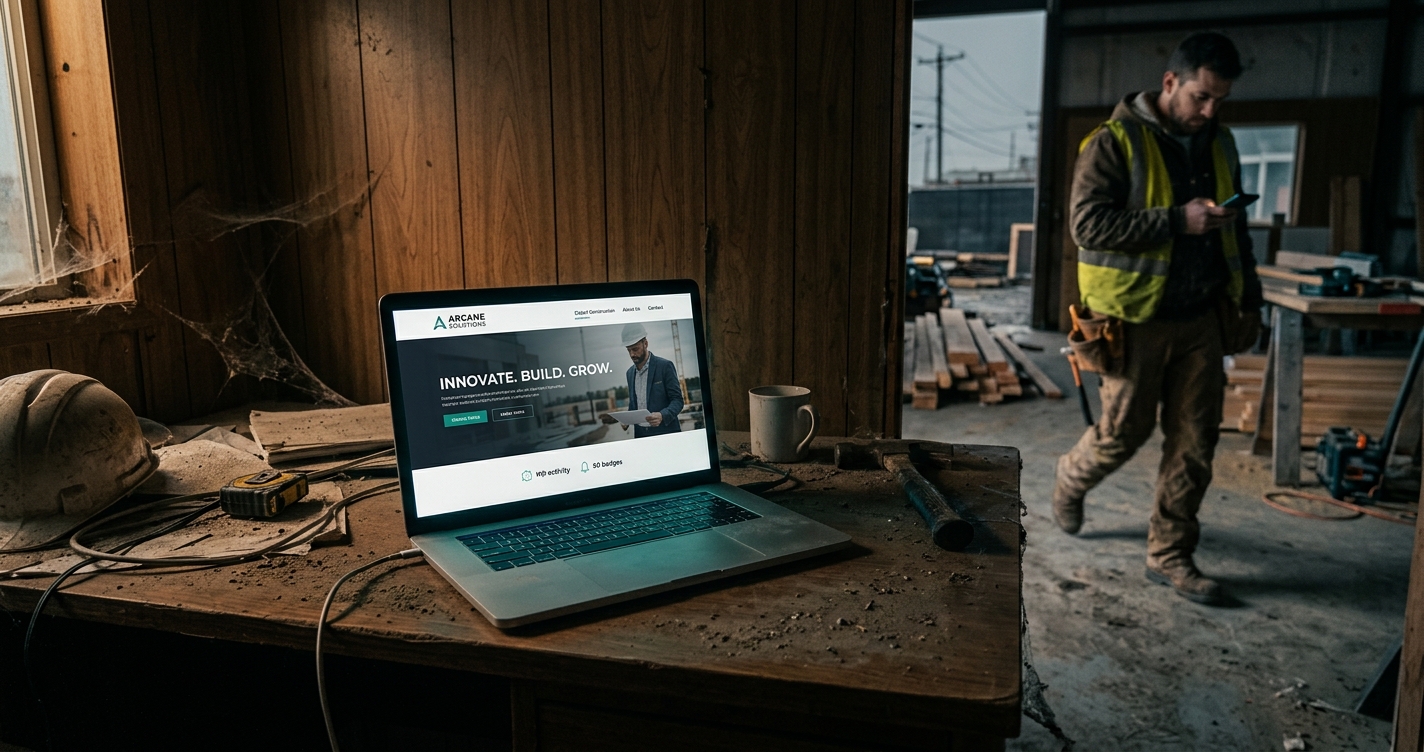
Your Website is a Brochure, Not a Lead Machine (Here's the Fix)
Your Website is a Brochure, Not a Lead Machine (Here's the Fix)
You’ve got a website. Good for you. It’s got your logo, some photos of your work, maybe a list of services. You paid good money for it. You tell people to “check out our website.” But let’s be honest: are leads pouring in from it? Probably not. More often than not, it’s just sitting there, looking pretty, like a digital brochure collecting dust. You’re hoping it does something, but it’s not delivering. It’s a sunk cost, not a revenue driver.
I know the feeling. I once had a website that was a masterpiece of design. Flashy animations, custom graphics, the works. I thought it would be a magnet for customers. Instead, it was a black hole. Visitors came, looked around, and disappeared. No calls. No forms filled out. Just digital tumbleweeds. It was a fancy digital billboard on a street nobody drove down.
This isn't about having a bad website designer. It's about a misunderstanding of what a website for a trades business needs to do. Most plumbers, electricians, and HVAC pros think their site needs to look slick. That's a mistake. Your website isn't an art gallery. It's a tool. And if it's not performing, it’s just draining your time and money without putting calls on your board. This isn't just my experience. Search any plumber website problems reddit thread, and you'll see a chorus of owners asking, "Why isn't my website working?"
The problem isn't your plumbing skills. It's that your website is built for passive viewing, not active lead generation. It's not set up to capture demand, qualify prospects, or move them down the sales funnel. It's a static display in a dynamic world. The good news? You don't need a complete overhaul or a new designer. You need to turn your brochure into a booking engine.
The biggest struggles for trades business owners with their websites stem from a lack of clear calls to action, poor mobile optimization, and no direct lead capture mechanisms. They assume visitors will just call. They don't. Fixing this requires understanding how customers actually behave online and building a site that guides them to take the next step.
Your Website's Not a Lead Machine: Here's Why
The leap from a great plumber to a successful business owner means understanding that your online presence needs to work for you. It’s not enough to be online. You need to be effective online. Threads on plumber marketing reddit are full of guys frustrated that their "great looking" websites aren't generating business. They're spending money on SEO or ads, sending traffic to a site that can't convert. It's like buying a Ferrari and only driving it to the grocery store once a week. You're not using it to its full potential.
These aren't isolated incidents. They are predictable patterns that emerge when a business assumes a website's job is just to exist. Let's break down the three biggest complaints we see about trades websites, and more importantly, how to fix them with systems that turn clicks into customers.
Complaint #1: No Clear Path to Action – Visitors Don't Know What to Do Next
Your website might have your phone number in the footer, maybe a tiny "Contact Us" link in the menu. But that's not enough. People land on your site because they have a problem: a leaky faucet, a clogged drain, a water heater on the fritz. They aren't browsing. They're looking for a solution, fast. If they have to hunt for a way to get help, they'll leave. This is why many plumber website conversion rates are abysmal.
The reality is, most visitors to your site are in a hurry, probably on their phone, and potentially stressed. They're not going to read every word. They're scanning for the "easy button." If your website buries the most important action – contacting you – you're essentially putting up a barrier between you and a paying customer. You're making them work to give you their money. And the moment they feel that friction, they're gone to the next search result.
The Fix: Obvious, Repetitive Calls-to-Action
Make it impossible for visitors to miss how to contact you. Your phone number should be large, clickable (especially on mobile), and appear in the header of every single page. Don't hide it. Make it prominent.
Beyond just a phone number, implement clear, concise calls-to-action (CTAs) throughout your site. Think buttons. Big, brightly colored buttons that say things like: "CALL NOW FOR EMERGENCY SERVICE," "SCHEDULE A PLUMBING APPOINTMENT," or "GET A FREE QUOTE." These buttons should lead directly to a phone call or a simple contact form. Place these CTAs strategically: above the fold (the part of the page visible without scrolling), at the end of service descriptions, and even within your testimonials. The goal is to guide every visitor directly to the next step.
Complaint #2: Not Mobile-Friendly – You're Losing Half Your Customers
Picture this: a homeowner has a plumbing emergency. What's the first thing they grab? Their phone. They search "plumber near me." If your website loads slowly, has tiny text, or requires pinching and zooming to navigate on a phone, you've lost them. They'll click the back button and call the next guy whose site works. Many small business website mobile issues are death sentences for plumbers.
This isn't just about aesthetics. Google ranks mobile-friendly sites higher. If your site isn't optimized for smartphones, you're not just frustrating potential customers; you're actively hurting your search engine visibility. You're telling Google your site isn't important for how most people search for services today. You're effectively putting up a "closed" sign for a huge chunk of your potential customer base, all because your website isn't built for the device in their hand.
The Fix: Responsive Design and Fast Loading Speeds
Your website needs to be "responsive." This means it automatically adjusts its layout and content to fit any screen size – desktop, tablet, or smartphone. This isn’t a nice-to-have; it’s a must-have. If your current site isn't responsive, that's a priority fix.
Beyond responsiveness, focus on speed. Tools like Google PageSpeed Insights can tell you how fast your site loads. Images should be optimized, code should be clean. Every second your site takes to load is a potential customer lost. Your website should be as quick and efficient as your service. Test it yourself: pull up your site on your phone. Is it easy to read? Can you find your number in less than 3 seconds? If not, it needs work.
Complaint #3: Generic Content – You Don't Stand Out from the Competition
Most plumber websites look identical. "We offer reliable plumbing services." "Experienced and professional." "Customer satisfaction guaranteed." Blah, blah, blah. This generic, uninspired language does nothing to differentiate you from the five other plumbers on the first page of Google. If your content doesn't speak directly to a local homeowner's specific problem, why should they choose you? This is a common theme in plumbing business marketing strategy discussions.
Your website content should do more than list services. It should build trust, demonstrate expertise, and address the specific pain points of your target customer. If you’re just rehashing the same boilerplate text as everyone else, you're missing a massive opportunity to connect with potential clients on a deeper level. You’re not giving them a reason to pick up the phone and call *you* specifically.
The Fix: Localized & Problem/Solution Focused Content
Stop being generic. Talk about the specific plumbing problems common in your service area. Do you deal with a lot of hard water issues in Southside? Mention it. Are old homes in the historic district frequently needing pipe replacements? Write about it. Use local landmarks, neighborhoods, and common issues to make your content relevant and personal. This tells a potential customer, "This plumber understands *my* unique situation."
For every service you offer, don't just state what you do; explain the problem it solves and the benefit to the customer. Instead of "Water Heater Repair," try "No Hot Water? Fast & Reliable Water Heater Repair in [Your Town] – Get Your Hot Showers Back Today!" Use keywords that people actually type into Google, like "clogged drain repair [city name]" or "emergency plumber [zip code]." This makes your content not just informative, but also highly searchable and compelling.
Frequently Asked Questions About Trades Websites
What